Company
Berkman Klein Center, Harvard University
Role
UX Designer
Product Area
Civic Technology (Democratic Deliberation Tools)
Overview
What is Frankly?
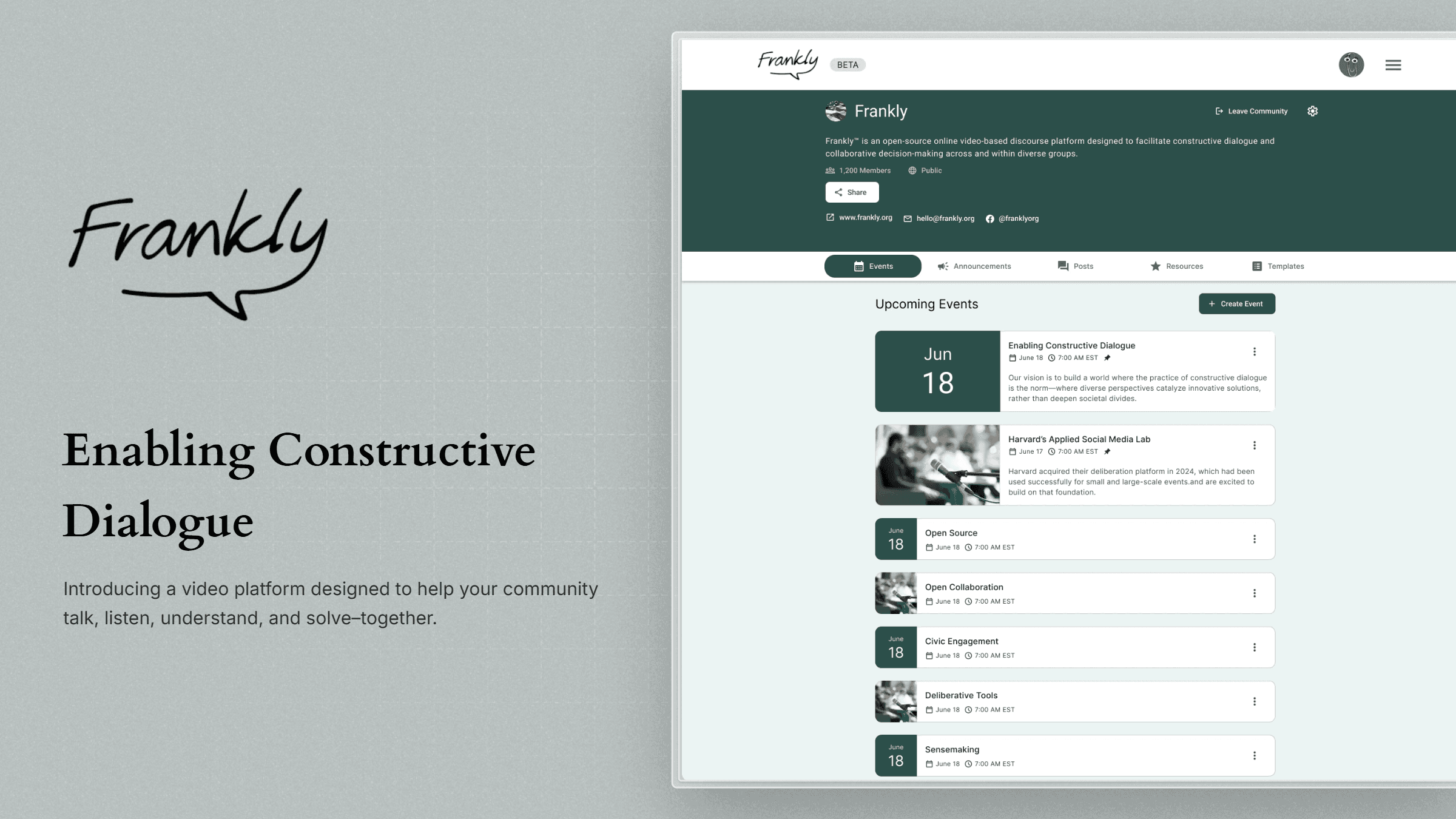
Frankly is an open-source browser-based video conferencing platform. The platform is used for civic dialogue by organizations like Unify America and Deliberations.us. It's intended to help facilitate conversation through integrated agendas and timed participation! Haven't you ever had a conversation where you never got a word in?
Introduction
I joined the team in Summer 2024 as a research assistant and the only UX Designer on the team at the time! We had just acquired the platform, previously known as Kazm. Over the course of the last two years, our design team has expanded and our general goal is to work with the existing users of the platform to create an improved experience. This involved simplifying the navigation and information architecture, and redesigning some task flows.
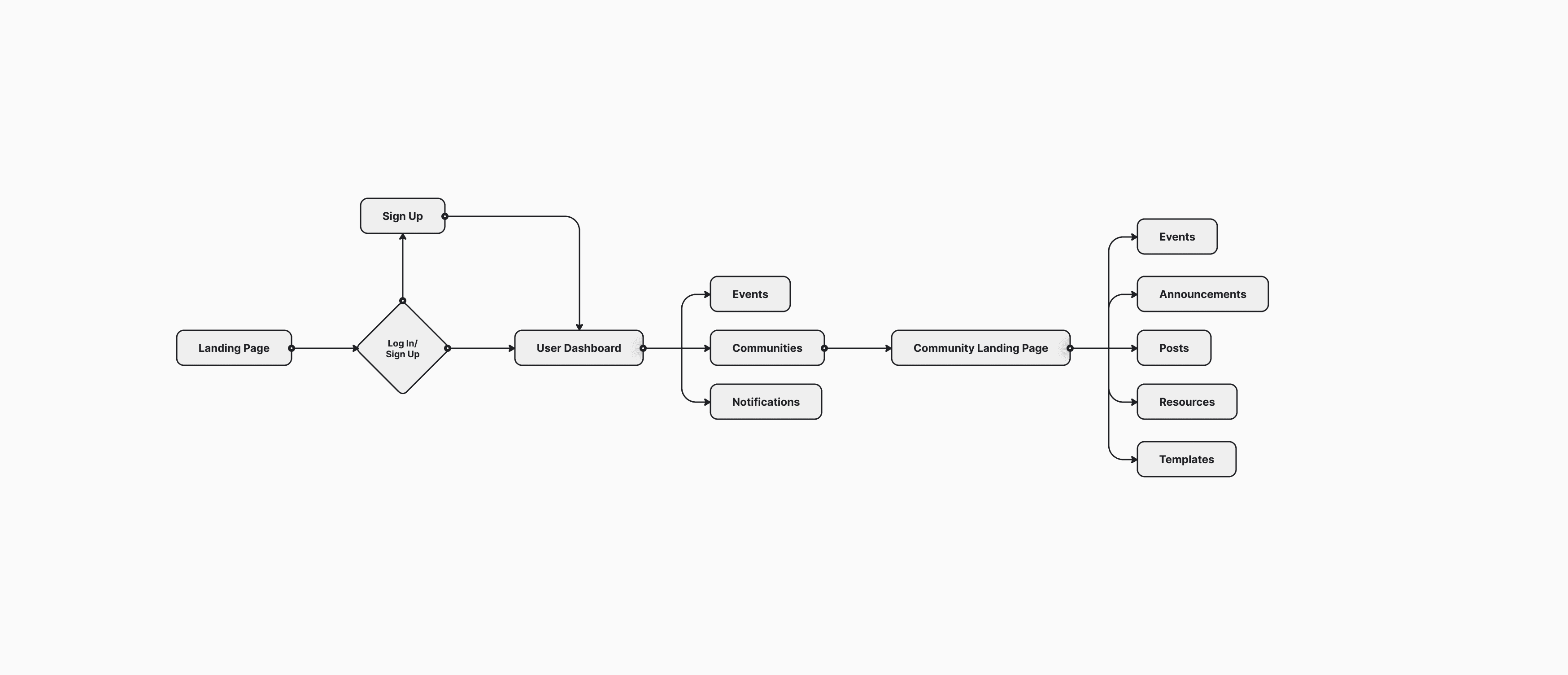
Preliminary discussions with the product manager led to the definition of three entities in the platform - the user, their community, and the event. In order to create an event, you had to be a user in a community.
Design Process
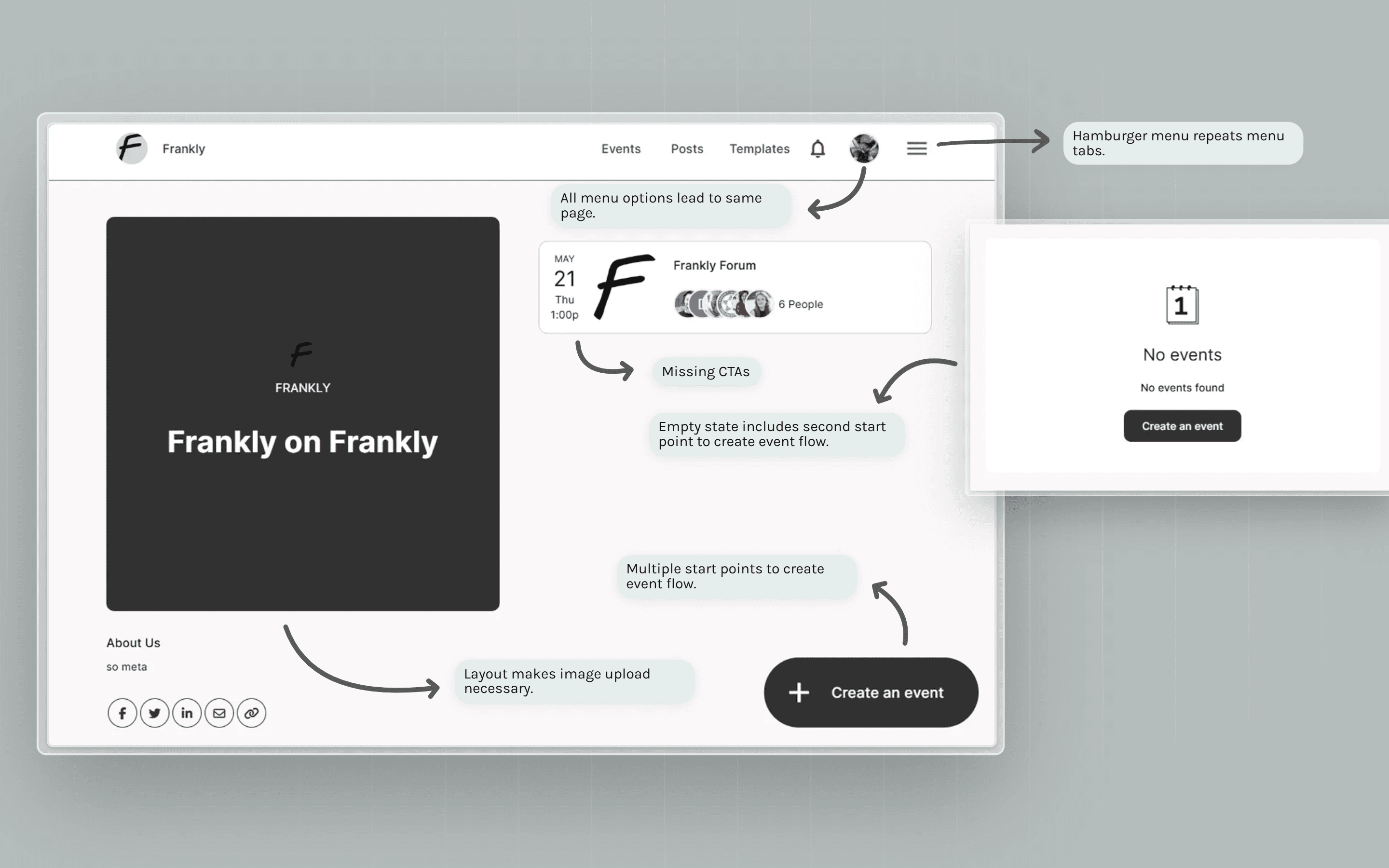
As a start, I synthesized existing user feedback and led a design audit to determine the current status of the platform.
Primary Research | UX Audit | Competitive Analysis |
|---|---|---|
Synthesized user insights from over 2000 survey responses | Usability Heuristics | Analysed task flows for meeting creation of 4 competitors |
User feedback led to the following insights:
Top level navigation was not intuitive.
Platform lacked internal consistency across task flows.
Error messages were missing from key flows.
Community Landing Page
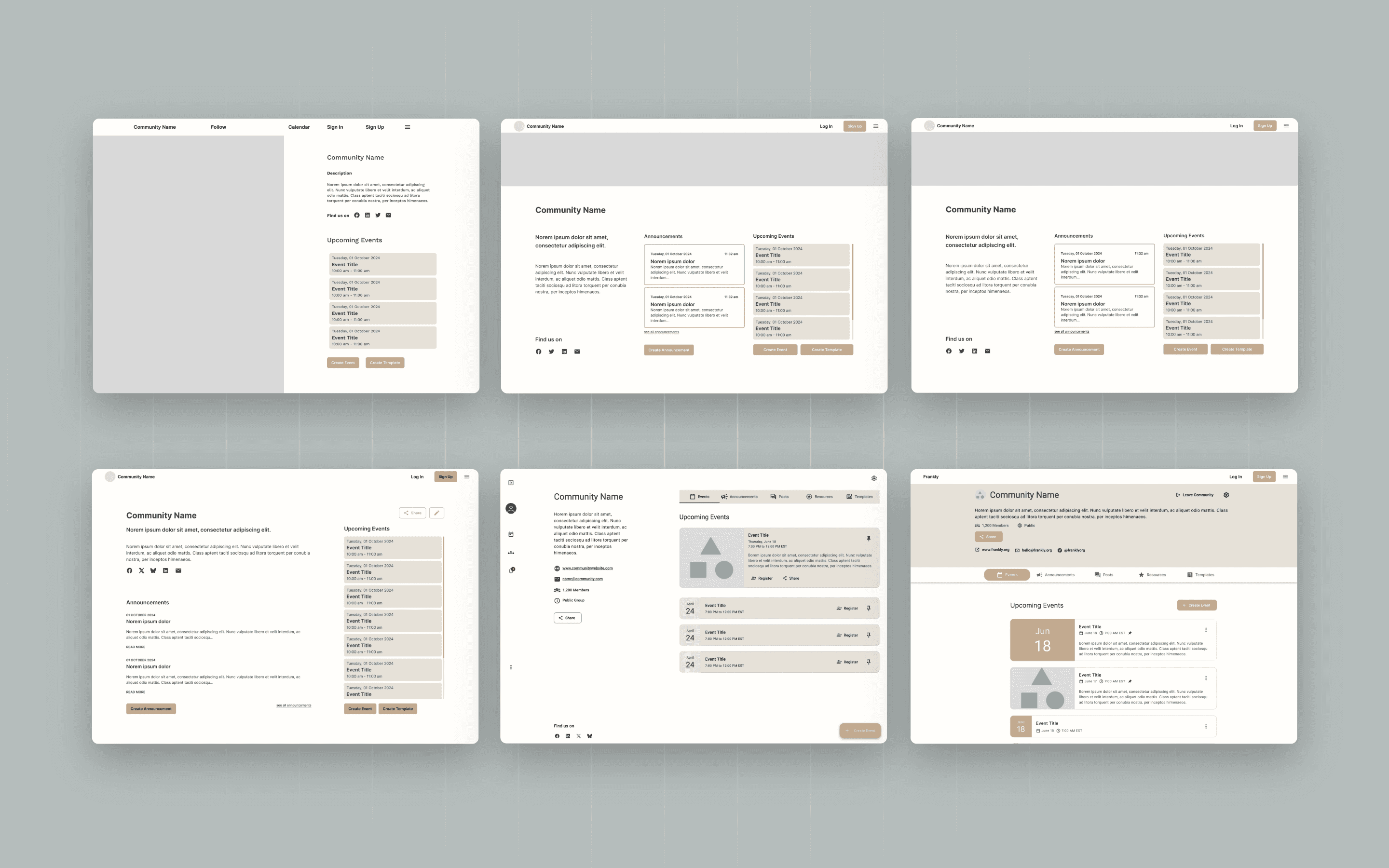
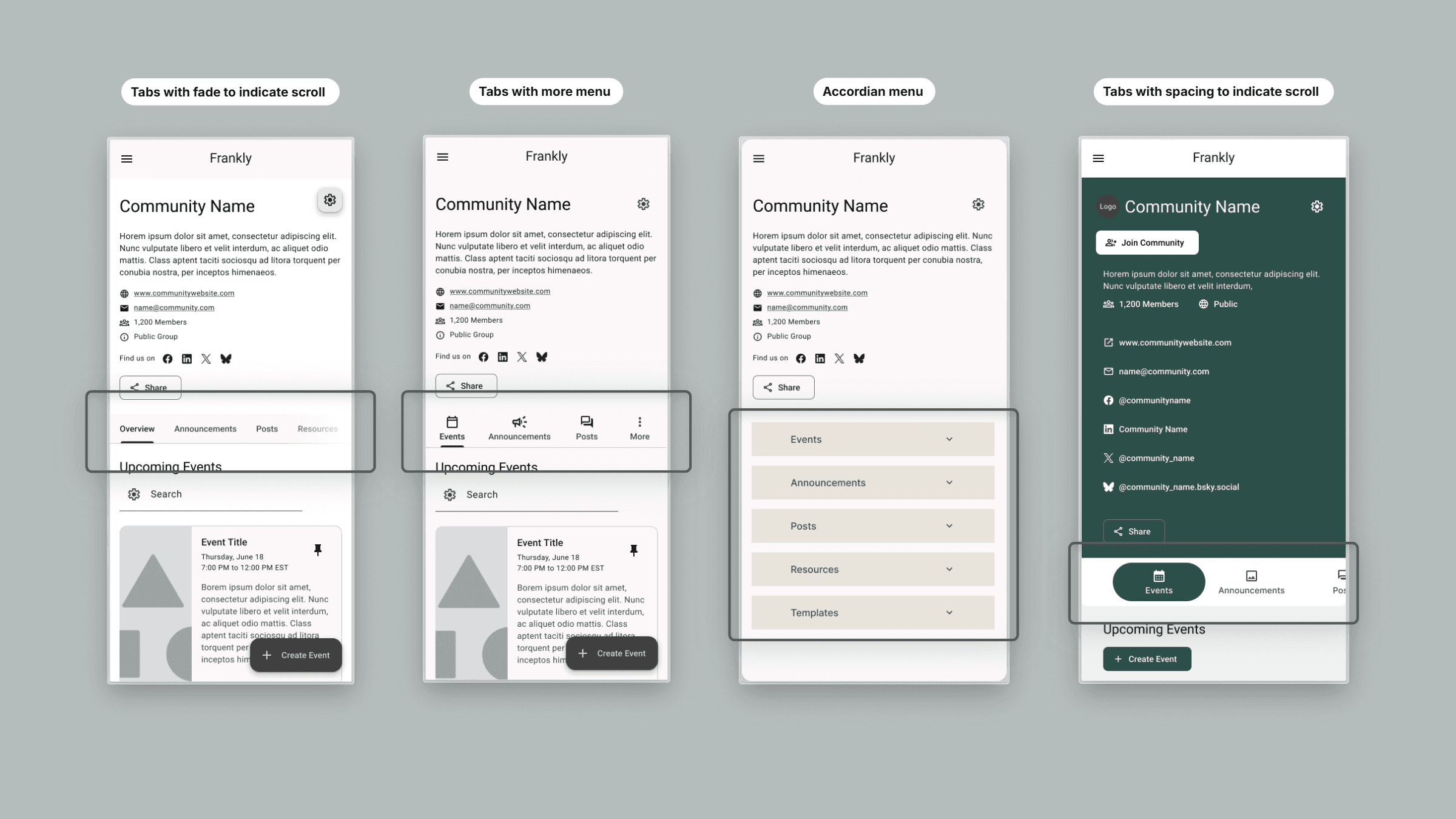
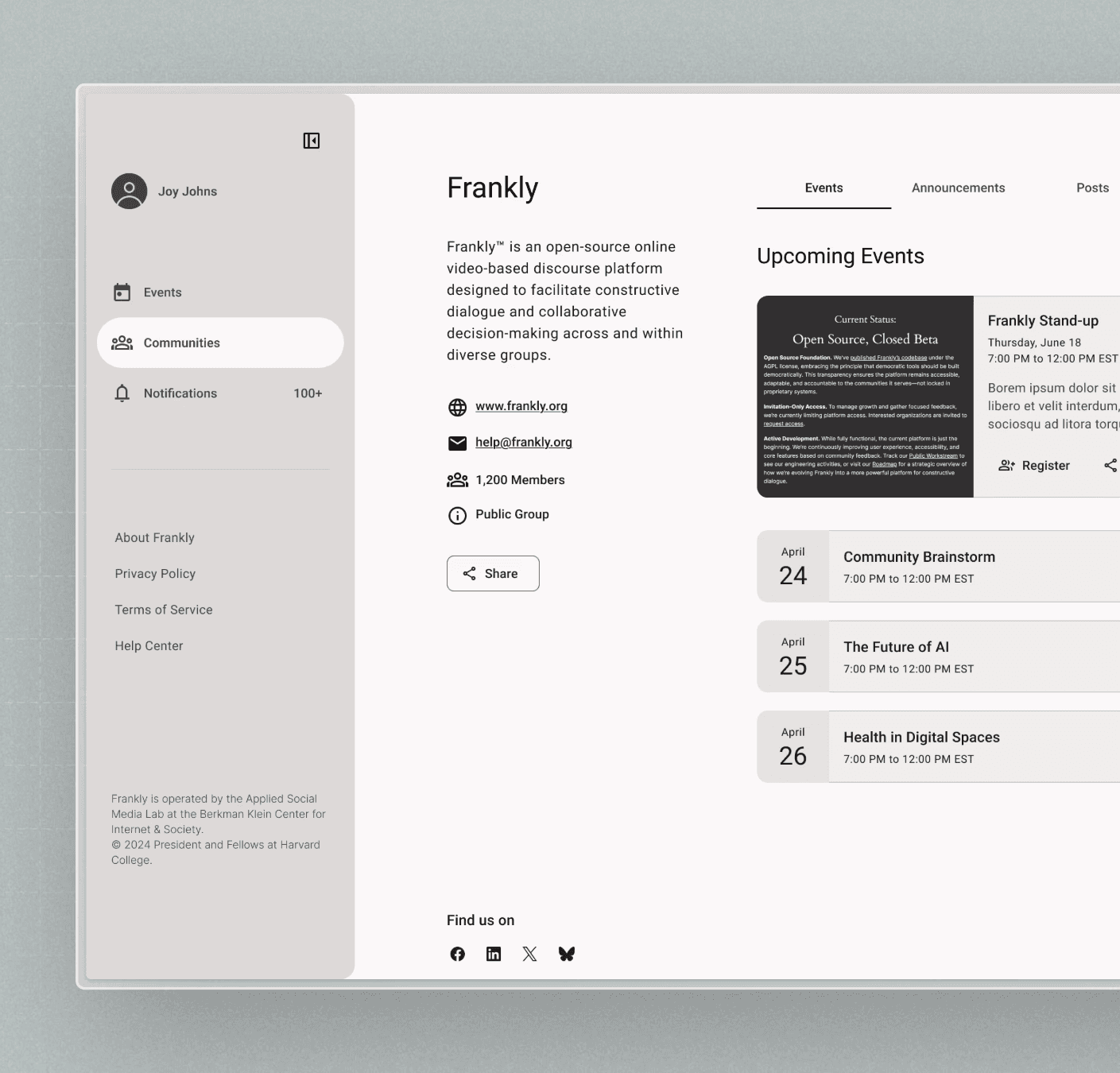
I owned the design of the community landing page - how would a user navigate within a community and how would a community share information with its members? I began with prototypes for the layout and secondary navigation within a community.
Some of the initial layouts considered the landing page a dashboard of sorts - description/image, calendar, and announcements with various calls to action.
We introduced secondary navigation to allow users to quickly peruse all information relevant to a community on a single page. The layout consisted a dashboard for the community member to receive all new information from the community. I considered one, two, and three column layouts. The final design was a single column layout, made due to accessibility considerations with reading and tab order.
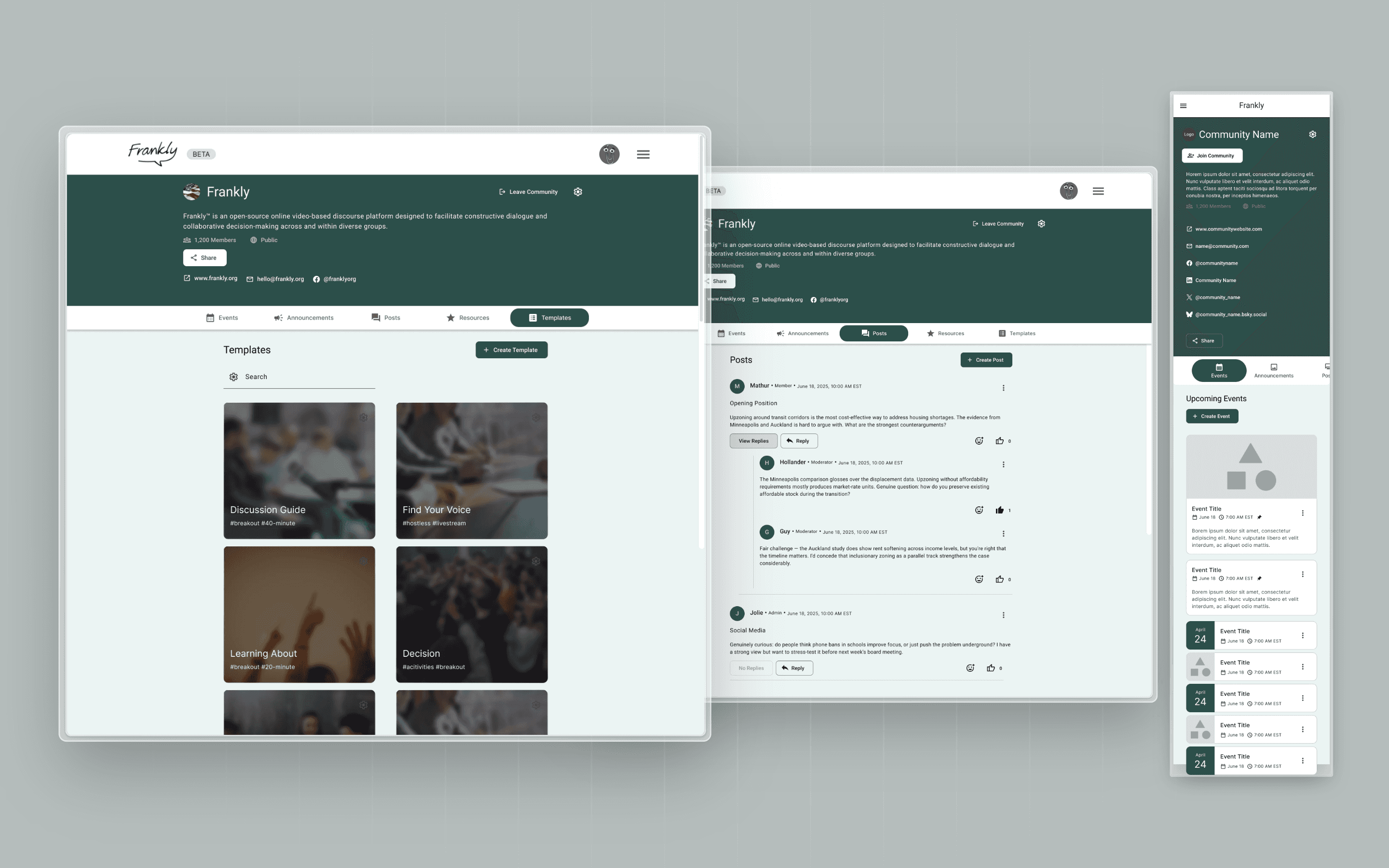
Final additions included determining which features–creating events, accessing templates, uploading posts–were available to which user. A community landing page could be reconfigured for the owner, administrators, facilitators, moderators, members, and visitors and.
In order to provide personalization, themes were introduced through a background and accent colour as seen below.
Working with Communities
Working with an existing user group required the team to negotiate how to introduce UX changes in a way that didn’t disturb platform usage. This meant rather than jumping in with our newly developed navigation, we would prepare specific UI components for handoff instead.
It has also been quite exciting to attend roundtable discussions that use Frankly as a way of usability testing. It shifted my focus to prioritize accessibility and varied levels of digital literacy. This meant building an explanation within each task flow rather than relying on prior knowledge.