Company
Marron Institute for Urban Management, NYU
Role
UI/UX Designer
Product Area
Civic Technology (Employment Access & Reintegration)
Overview
What is onBoard?
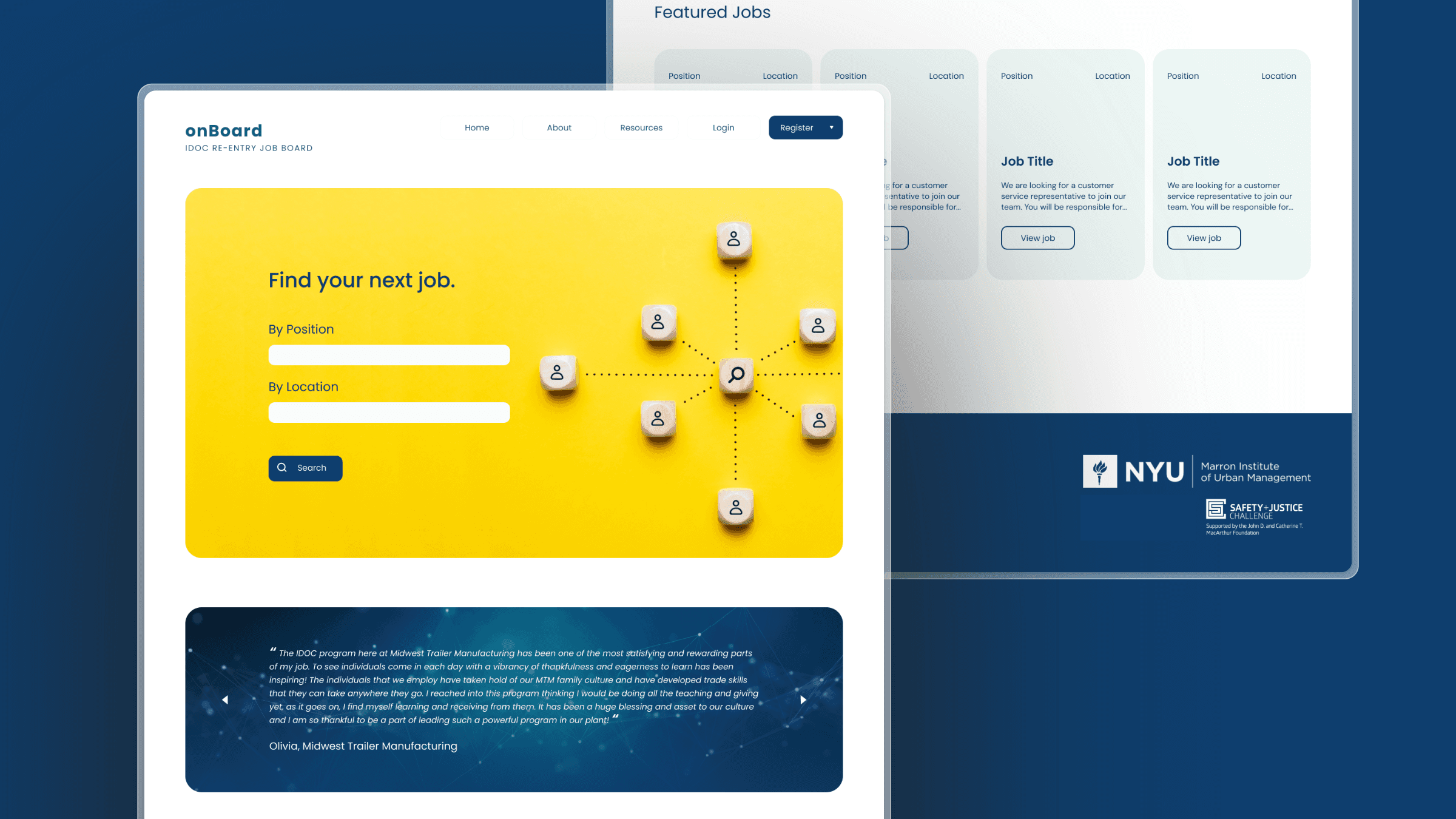
OnBoard is a re-entry job listing platform to be utilized by the currently incarcerated to ensure fair-chance job opportunities post release. The goal was to connect vetted employers with job-seeking employees to improve post-release employment outcomes.
Introduction
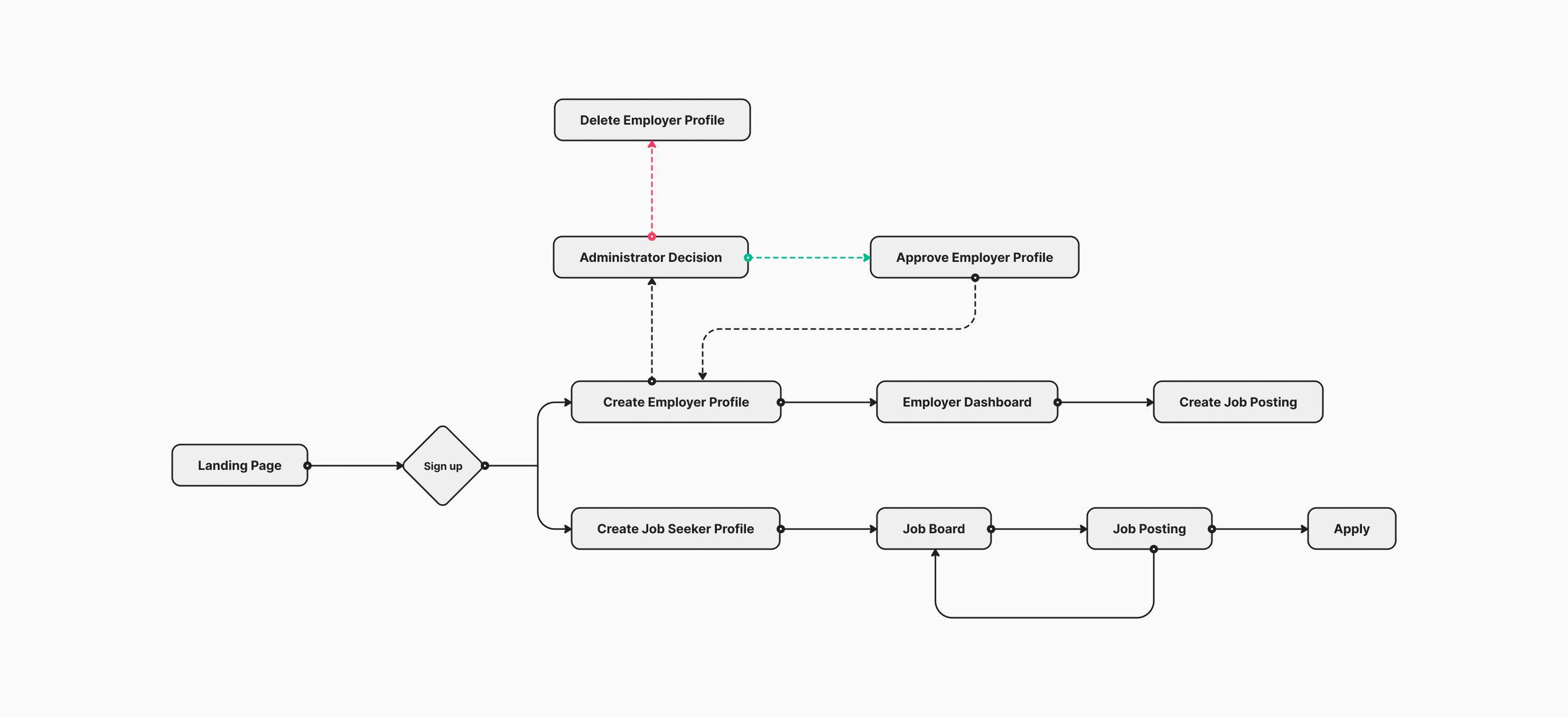
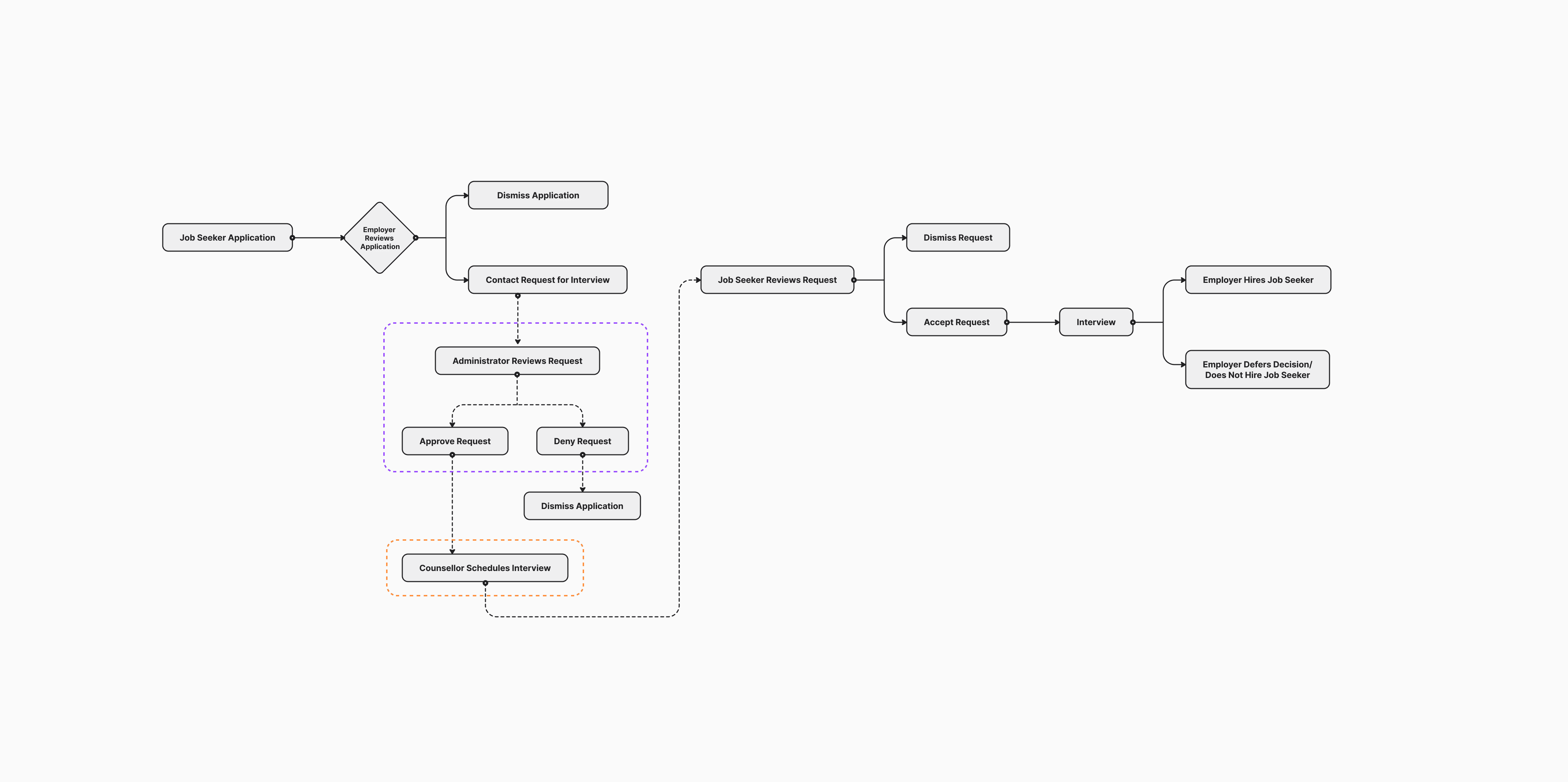
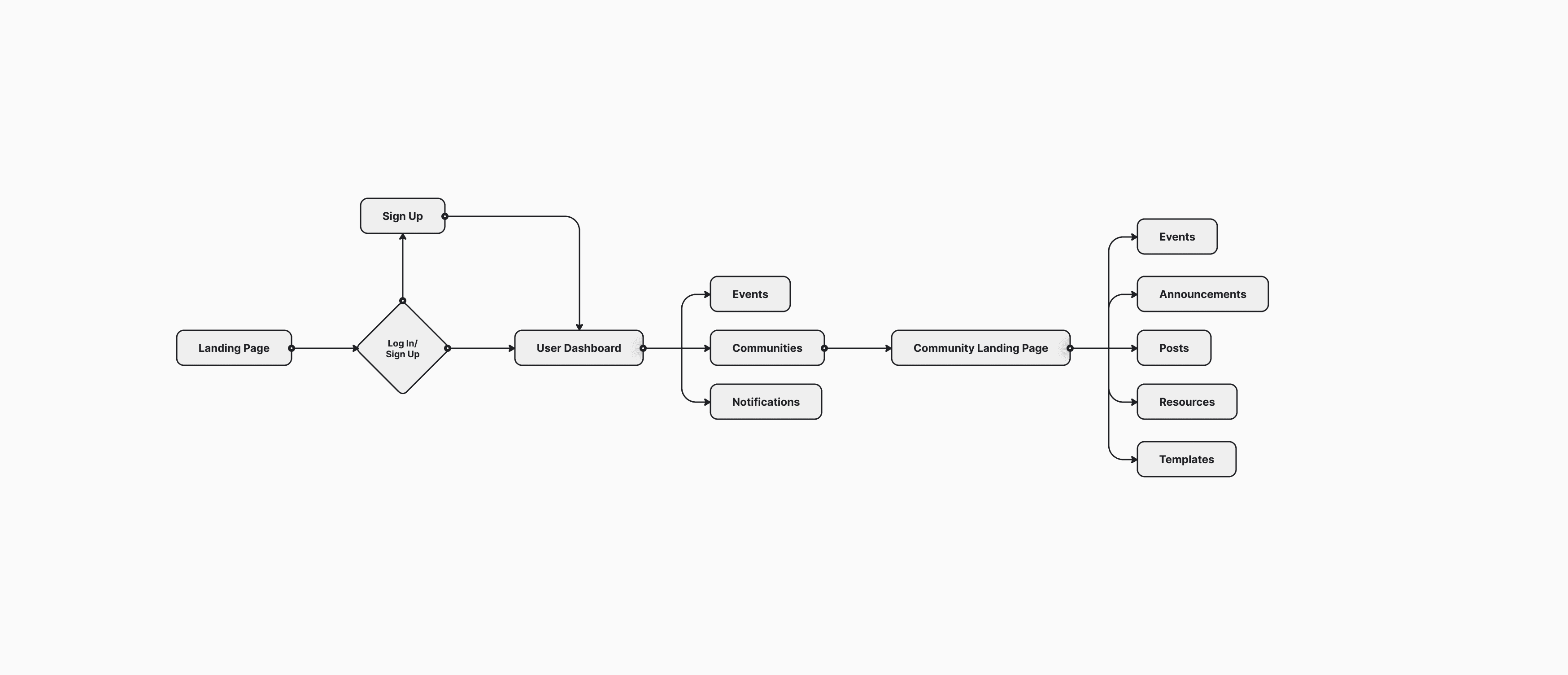
I joined the team in Summer 2023 as a UI/UX designer to work on a preliminary prototype of the platform. At this point, the platform was focused on providing a resume building tool and was pivoting to find employment opportunities. As such, the main complexity was redesigning the information architecture to support multiple user groups–job searchers, employers, and the mediating institution–within the end-to-end process of employment–application, interview, hiring decision, and employment offer.
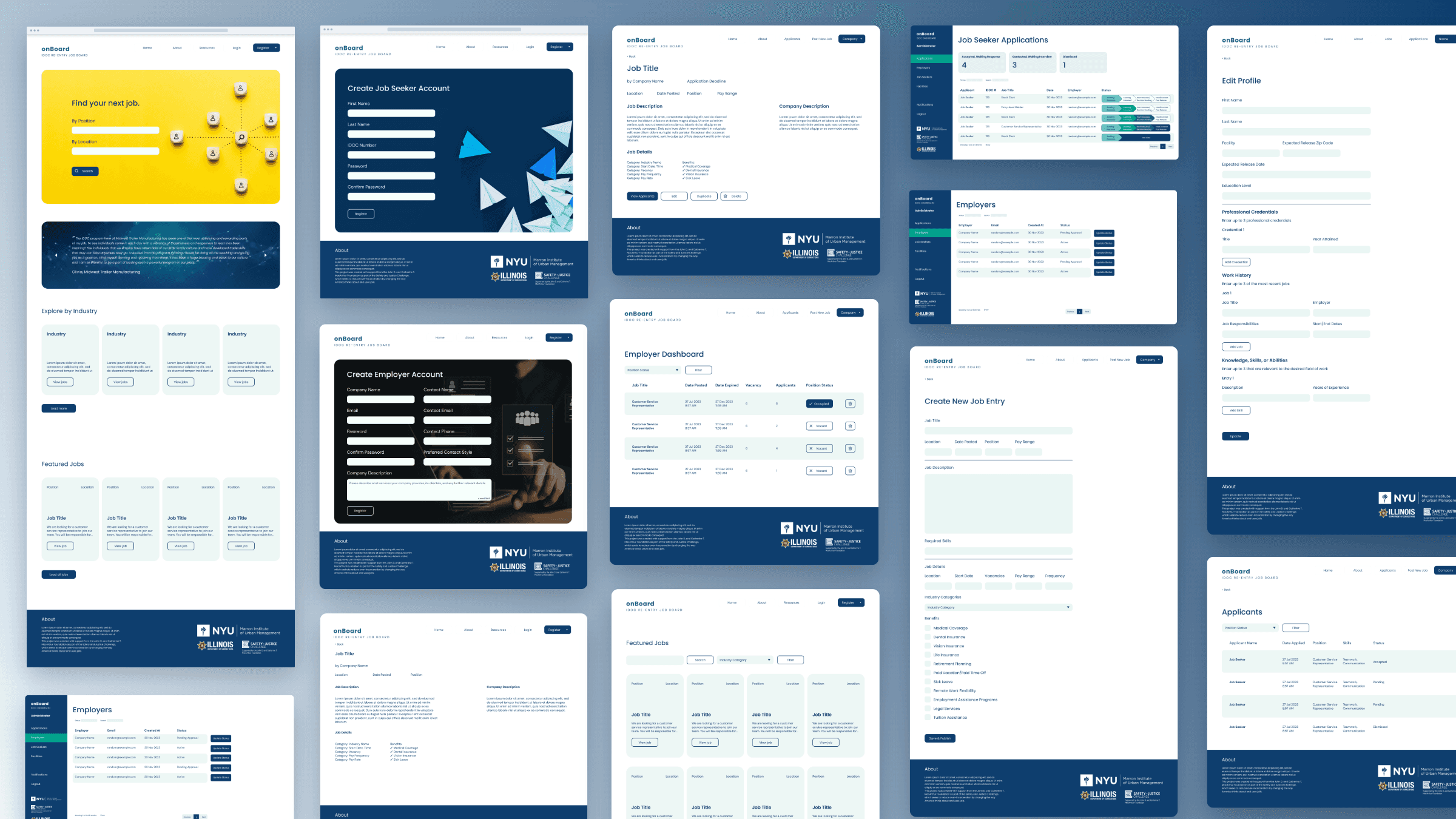
Dashboards
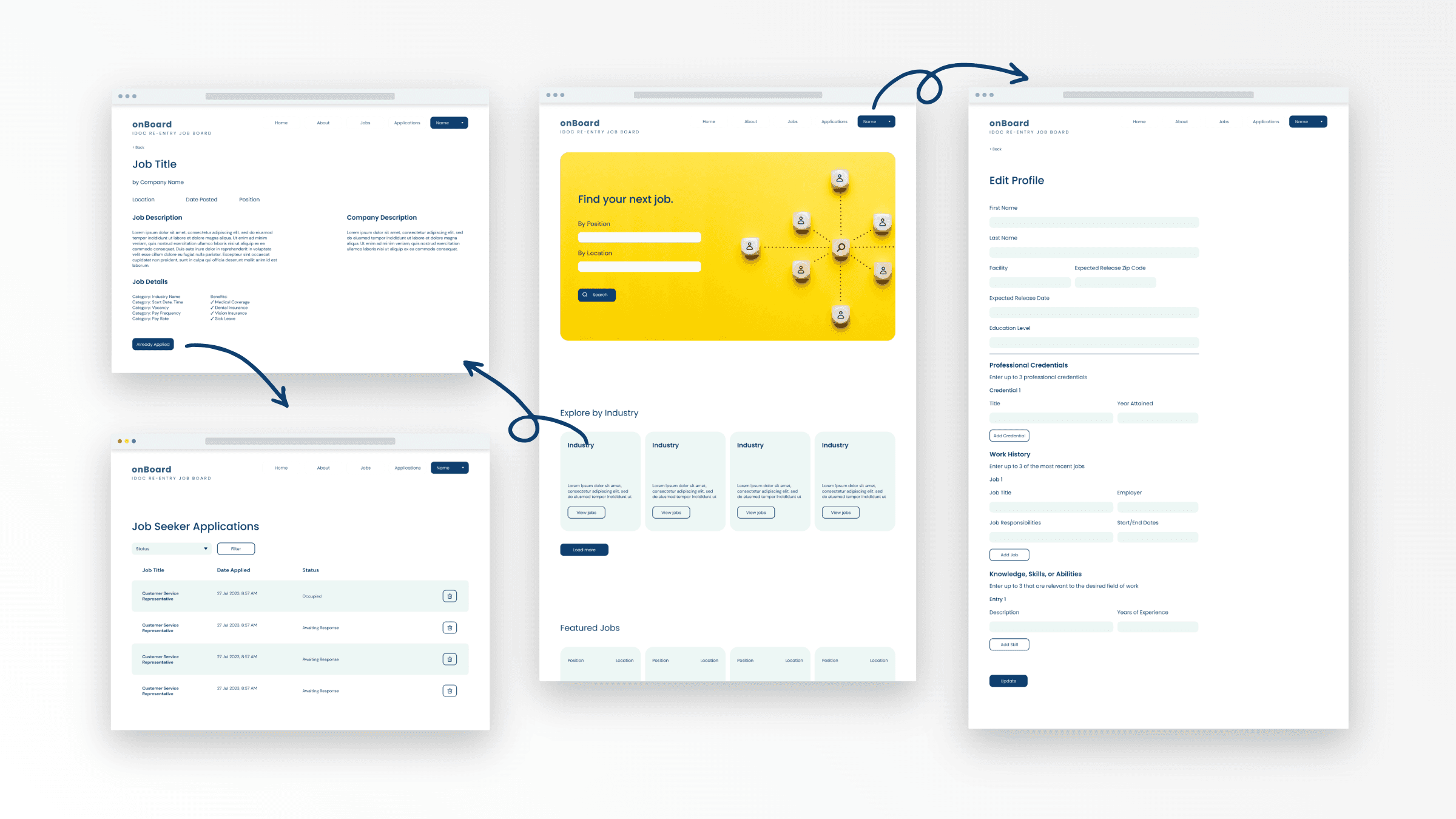
The landing page was directed to employees as they were the main user group we were designing for. However, all three groups could log into the platform from the same entry point.
Job Seeker
The focus for this user group was job discovery and ease in application. Due to varying levels of accessibility, we ended up creating two flows–building a resume and searching for a job. This meant that on signing up, the job seeker could create their resume, thereby simplifying the application process to a single click. We ended up user testing only once due to difficulties accessing this group and as such decided to create a print manual on how to use the platform for all the user groups.
Employer
Employers had a dashboard that allowed them to view all applicants in a single page so as to streamline viewing and accepting applications. This dashboard was modified for the next user group.
Institutions
Within this group were two kinds of users–counselors and administrators, each had their own dashboard to process requests from employers and their potential employees. They could view the status of each applicant through what the team called a ‘pizza tracker’ and coordinate decisions between the two parties.
Reflections
This was my first experience within civic technology which quite clearly highlighted the need for simplification within systems design. The hiring process for any company is quite complex with a number of different parties involved but here, one could quite easily lose sight of the target group as a result.
I did a deep dive into accessibility consideration for varying levels of digital literacy–text sizes, language and content design, use of text labels vs icons, and tutorials. Parallely, the team designed what information was necessary to third-parties due to the sensitive nature of the target group. I think if I were to revisit this project, I would have introduced testing with other user groups at an earlier stage so as to confirm task flows.